Since joining BC Transplant as an in-hospital organ donation coordinator for Vancouver Island 13 years ago, Shannon McCloskey has made it a priority to attend every donor medal ceremony in Victoria. Even juggling the shift hours of work, family and home life, Shannon has only missed two ceremonies.
“It is cathartic for me to be there. I get to see the family members as themselves, not in crisis mode, and they are ready to talk about their loved one,” remarks Shannon.
Every year in the fall, BC Transplant hosts three donor medal ceremonies around the province to honour deceased organ donors and their gifts of life. Since the pandemic, there is also a virtual ceremony. Family members of deceased donors are invited to attend a ceremony in the calendar year following their loved one’s death.
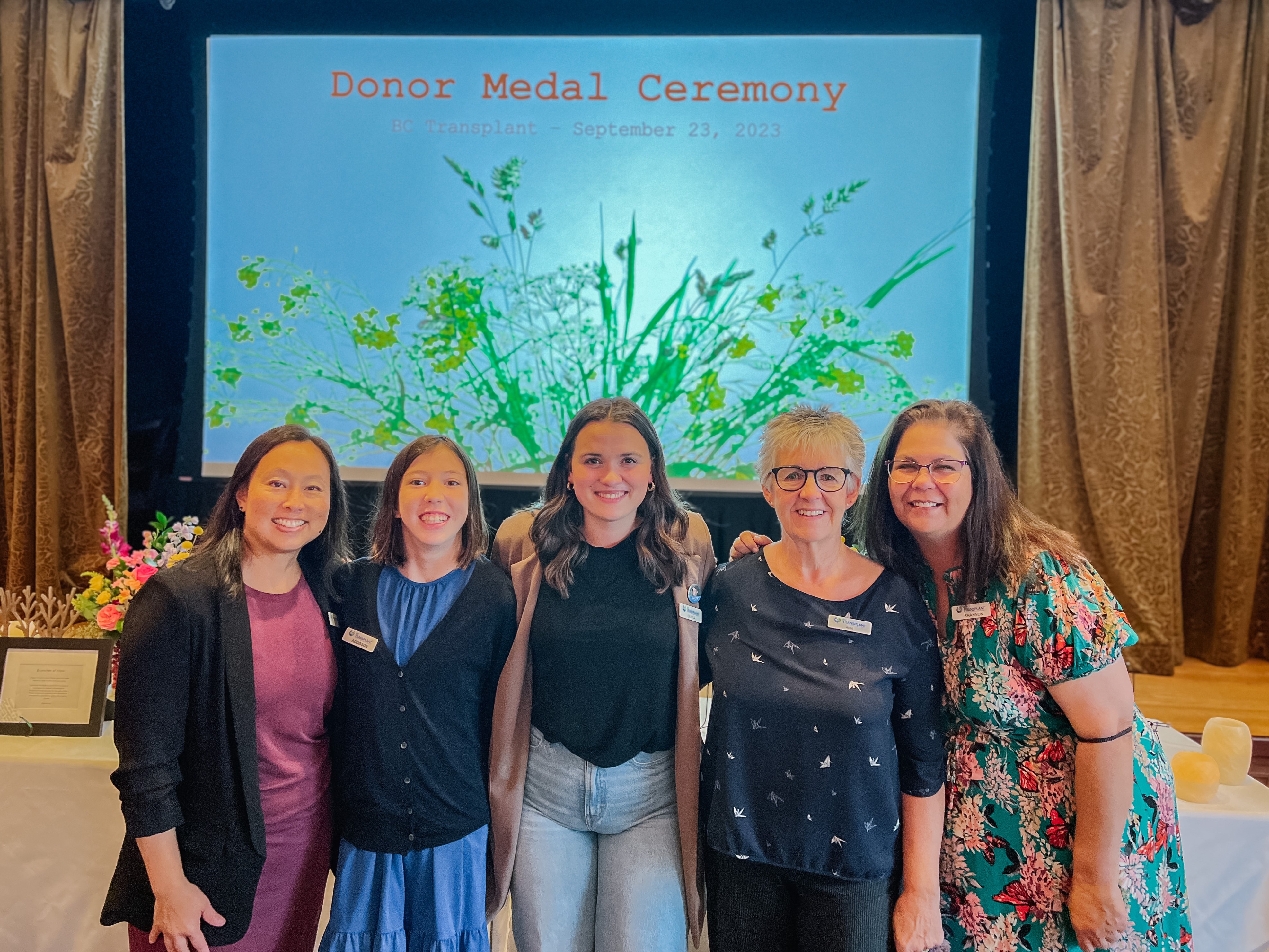
Shannon on the far right with BCT staff and volunteers at the
2023 Donor Medal Ceremony in Victoria.
This year families will receive a newly designed medal featuring art created by Coast Salish artist Margaret August. The art tells the story of the gift of life, depicting double-headed serpents to represent rebirth, transformation and strength. The sun in the centre signifies hope and joy.
Shannon, a Red River Métis person living away from her ancestral homeland, is trying to reconnect with her own Indigenous history while also caring for Indigenous families as they deal with the trauma of losing a loved one. She believes the new medal is a small way to recognize Indigenous culture.
“What works for me when I meet with an Indigenous family is to come from a curiosity standpoint, and not assume anything, especially with more than 200 First Nations in BC,” explains Shannon. “I will share that I am a colonized Metis person learning about my own Indigenous background, then I will ask them, ‘What nation are you with?’ ‘Is there anything I can help you facilitate?’ ‘Can I reach out to an Elder for you?’”
She has facilitated a sweetgrass ceremony at a donor’s bedside, with the sweetgrass accompanying him into the operating room. She also arranged for drumming to accompany a donor by calling into the operating room and having it on speakerphone.
While things have changed a lot since Shannon started her career, she says one thing she continues to emphasize when she trains critical care teams is that everyone, including Indigenous peoples, should be offered the opportunity to make a decision regarding organ donation.
“People will say they heard First Nations people don’t donate so they don’t want to ask Indigenous families about organ donation. They think that is being culturally sensitive,” she explains. “But that can actually feed into the ongoing mistrust of the healthcare system because Indigenous peoples are being treated differently if we don’t offer them the choice. It’s ok for them to say no. It is not ok for them not to make that decision themselves.”
Shannon knows firsthand why it’s so important all families are offered the choice. At the donor medal ceremonies when she reconnects with them a year later, she gets to see how giving the gift of life has profoundly impacted them.
She remembers one donor and their family often. The young man’s parents were not together, but at his bedside, the entire family came together, united in their decision to do something to help others. The donor loved a specific sports team and when his family showed up the next year at a donor medal ceremony, everyone was wearing that team’s jersey, united once again in their support for their loved one and his organ donation.
“I love seeing the photos of their loved ones, because what I know of the donor is what I saw in hospital, when their life is already gone” says Shannon. “When I see people fishing, sailing, together with their families, in the vibrancy of their life, it’s healing for me too. It’s full circle, it’s closure.”
--------
There are almost 600 people in BC waiting for their gift of life. While 90 per cent of British Columbians support organ donation, only about one in three are actually registered. Are you registered?
Registeryourdecision.ca